
The air is getting crisp, the leaves are starting to pile up, and you're out in the yard getting things ready for the coming winter. As you rake leaves away from your foundation, you notice something that wasn't there last spring: a siding panel that looks a little wavy, or maybe the paint near a window is starting to peel. These small details might seem minor, but here in West Alton, they can be early warnings of bigger problems. With our unique river-valley climate, the transition into October and the first hard freezes can turn a small siding issue into a significant source of water intrusion and damage.
As a superintendent who has managed countless projects, I’ve seen how our local environment tests a home's exterior. The combination of humidity, wind, and sharp temperature drops puts immense stress on siding. Before winter truly sets in, it's the perfect time to give your home's protective shell a thorough inspection.
Common Signs and Symptoms
Your siding is your home’s first line of defense against the elements. Spotting trouble early can save you from costly and complex repairs down the line. As our crews perform inspections, we look for a specific set of siding repair signs. Here’s what you should look for on your own home:
- Warping or Buckling: Panels that are supposed to be flat but now appear wavy or bowed are a classic sign of trouble. This is often caused by moisture getting behind the siding or improper installation that didn't allow for expansion and contraction.
- Cracks, Holes, or Gaps: Even small openings are an invitation for water and pests. Pay close attention to corners, seams, and areas around vents or spigots.
- Loose Panels: Have you noticed loose siding after temperature swings? The shift from a warm autumn day to a cold night can cause materials to expand and contract, sometimes working nails or fasteners loose. This is especially common with vinyl siding and can be exacerbated by our region's high winds.
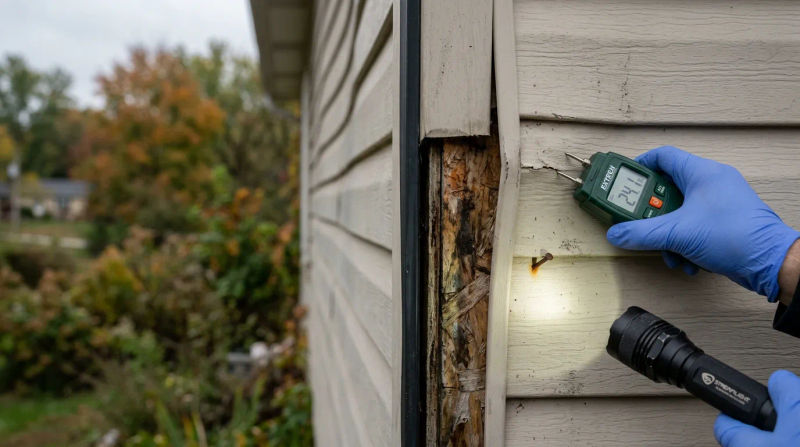
- Soft Spots or Rot: Carefully press on your siding panels, especially near the ground, under windows, and at the bottom of walls. If the material feels soft, spongy, or crumbles, you likely have siding moisture damage West Alton residents frequently encounter. This indicates that water has penetrated the siding and is decaying the wood sheathing or framing underneath.
- Fungus, Mold, or Mildew: Dark streaks or fuzzy spots, particularly on the shaded sides of your home, point to excess moisture. While sometimes just a surface issue, it can also signal water being trapped behind the panels.
- Failing Caulk: The sealant around your windows, doors, and trim is a critical barrier. If it's cracked, shrinking, or pulling away, it creates a direct path for water to get into your wall structure.
- Peeling Paint or Staining Inside: Sometimes the first sign of a siding problem appears indoors. Unexplained water stains on interior walls or ceilings, or paint that is bubbling or peeling near windows, can be caused by water making its way through a compromised exterior.
What Causes This Problem
Understanding the root cause of siding failure is key to implementing a lasting solution. In West Alton, problems are rarely caused by a single factor. Instead, they are usually a combination of environmental stress and the specific construction of our local homes.
Many properties in our area were rebuilt in the 1990s and early 2000s following the Great Flood of 1993. These homes, often modest ranch or two-story structures, were built using the cost-effective materials and methods of that era. While functional, the siding systems, house wraps, and flashing techniques from that period may not have the advanced water management features of today's products. Over two decades of exposure to our climate can push these materials past their expected lifespan.
The West Alton environment itself is a major contributor. Our proximity to the river means high humidity for much of the year. This moisture is constantly trying to find its way into your home's walls. When it gets behind siding - through a cracked panel or failed caulk - it gets trapped. As we head into October, the first hard freeze arrives. That trapped water turns to ice, expands, and can physically push siding panels off their fasteners, break seals, and damage the sheathing beneath. This freeze-thaw cycle repeats all winter, making small issues progressively worse.
Furthermore, the open landscape of the river valley exposes homes to significant wind loads. Wind can drive rain into tiny crevices and put constant pressure on siding panels, leading to rattling and loosening over time. These combined forces create a perfect storm for siding failure if the system isn't perfectly maintained.
When to Call a Professional
Some homeowners might be tempted to patch a small crack with caulk or attempt to re-secure a loose panel themselves. While a minor, isolated repair can sometimes be a temporary fix, it often masks a deeper issue. The visible damage is frequently just a symptom of a systemic failure.
Deciding between siding replacement vs repair in cold weather is a critical calculation. Here are a few scenarios where calling for a professional assessment is the wisest course of action:
- If you see signs of rot or soft spots: This is not a surface-level problem. It means water has breached the siding, the weather-resistant barrier, and is now damaging the structural components of your wall. Our trained crews are equipped to remove the siding, assess the extent of the rot, replace damaged sheathing, and ensure the new siding is installed with a proper water management system to prevent recurrence.
- If the damage is widespread: If you notice warping, cracking, or loose panels in multiple areas, it suggests the entire siding system may be nearing the end of its life. A piecemeal repair approach can become a frustrating and expensive game of whack-a-mole. An experienced professional can evaluate the overall condition and recommend whether a targeted repair or a full replacement is the more cost-effective long-term solution.
- If your home is elevated: Many West Alton homes are built on stilts, piers, or high foundations. Working at height requires specific safety equipment and expertise. Our technicians are trained and insured to work safely on these structures.
Attempting complex repairs without understanding the underlying water-shedding principles can inadvertently trap moisture and make the problem worse. A professional diagnosis ensures the root cause is addressed, not just the symptom.
Conclusion
Your home's siding is more than just a cosmetic feature; it's a critical system that protects your structure, your family, and your investment from the elements. As the leaves fall and the first frosts approach, take a few moments to walk around your property and look for the key siding repair signs we've discussed - warping, cracks, soft spots, and failing caulk. The unique environmental pressures in West Alton, from river moisture to freeze-thaw cycles, mean that small vulnerabilities can escalate quickly once winter arrives.
Addressing these issues now, in the fall, is far easier and more effective than dealing with an emergency leak during a January ice storm. An ounce of prevention truly is worth a pound of cure. Don't let a small concern today become a major headache tomorrow.
If you notice any of these signs, contact a local General Contractor professional for an inspection. An expert eye can help you understand the health of your home's exterior and create a plan to ensure it stays protected for many winters to come.