
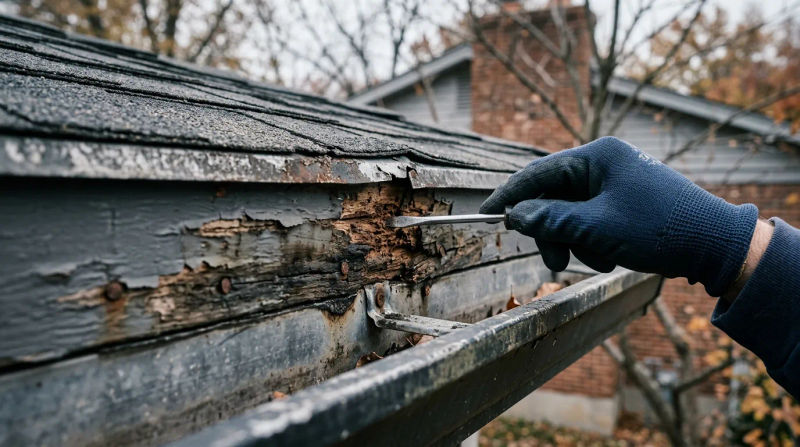
You’re up on the ladder for that annual fall chore: clearing out the gutters. As you scoop out handfuls of damp leaves, you notice the paint on the wooden board behind the gutter is bubbling and peeling away in long strips. You press a finger against the wood, and it feels surprisingly soft, almost spongy. This is a common discovery for homeowners in Maryland Heights, especially as the wet October weather gives way to the first freezes. That seemingly small issue with the trim on your roof's edge is often the first warning sign of a much larger problem.
That board is your fascia, and it plays a critical role in protecting your home. It’s the long, straight board that runs along the lower edge of your roof, directly behind your gutters. It supports the bottom row of roof tiles or shingles and the gutters themselves, while also blocking water from entering the roof deck and the walls of your home. When it fails, it leaves your house vulnerable. As a project superintendent with over 15 years in the field, I’ve seen how quickly minor fascia issues can escalate into major structural repairs, particularly with the freeze-thaw cycles we experience here.
Common Signs and Symptoms
Identifying fascia board problems early is key to preventing widespread damage. A thorough inspection in the fall, before winter sets in, can save you significant headaches. When our crews perform an assessment, we look for a specific set of roof edge wood damage symptoms. Here’s what you should look for on your own home:
- Peeling or Flaking Paint: This is often the very first sign that moisture is present. Paint is your fascia's first line of defense. When water gets behind it, it causes the paint to lose its adhesion, leading to bubbling, cracking, and peeling.
- Soft or Crumbling Wood: If the paint is compromised, take the next step. Carefully press the wood with a screwdriver or the handle of a tool. If it feels soft, spongy, or crumbles under light pressure, you have wood rot. This is one of the most definitive fascia board rot signs Maryland Heights homeowners encounter.
- Dark Stains or Discoloration: Water running down the fascia will often leave dark streaks or patches of discoloration. This can indicate a gutter leak, an issue with the drip edge, or water seeping from behind the board.
- Visible Mold, Mildew, or Fungus: Green, black, or white fuzzy growth on the board is a clear sign of a persistent moisture problem. This not only damages the wood but can also pose health concerns.
- Gutter Detachment: Are your gutters sagging or pulling away from the house? Since gutters are attached directly to the fascia, this is a strong indicator that the wood behind them is no longer solid enough to hold the fasteners. The weight of water, ice, and debris will cause them to fail.
- Pest Infestations: Rotting, damp wood is an open invitation for pests. Carpenter ants, termites, and bees love to nest in soft fascia boards. You might see small holes, sawdust-like material (called frass), or increased insect activity near your roofline.
- Interior Water Leaks: In advanced cases, you might notice water stains on the ceiling or walls inside your home, typically where the wall meets the ceiling. This means water has bypassed the fascia and soffit and is now entering your home's structure.
What Causes This Problem
Fascia boards don’t fail on their own; they are almost always a symptom of a water management issue. Understanding the root cause is essential for a lasting repair. Our technicians are trained to trace the problem back to its source to ensure our solution is permanent, not just a temporary patch.
- Clogged Gutters: This is the number one cause. When heavy leaf fall clogs your gutters, rainwater has nowhere to go but over the edge, cascading down the face of the fascia board. This constant exposure saturates the wood and leads to rot. In many classic 1950s Ranch-style homes found throughout Maryland Heights, their low-pitched roofs can allow debris to accumulate more easily in gutters, making regular cleaning even more critical.
- Improperly Installed or Missing Drip Edge: A drip edge is a metal flashing installed at the edge of the roof that directs water away from the fascia and into the gutters. If it's missing, damaged, or installed incorrectly, water can wick behind the gutter and directly onto the wood, causing it to rot from the top down.
- Roofing Issues: Damaged or improperly installed shingles at the roof's edge can allow water to get underneath and saturate the roof decking and, eventually, the fascia board.
- Ice Dams: During our cold Missouri winters, snow can melt on the warmer parts of your roof and then refreeze at the colder edge, creating a dam of ice. This traps melting snow behind it, forcing water under the shingles and down into the soffit and fascia.
- Age and Weathering: Wood is a natural material that breaks down over time. Decades of exposure to sun, rain, and temperature fluctuations will eventually wear down even the best paint job, allowing moisture to penetrate. Many homes from the post-war building boom are now facing the natural end-of-life for their original exterior wood components.
When to Call a Professional
While some homeowners are comfortable with DIY projects, fascia repair often requires more expertise than it appears. Deciding when to replace fascia boards before winter is a critical decision that depends on the extent of the damage.
A small area of peeling paint on a solid board on a single-story home might be a manageable DIY task. You can scrape, sand, prime, and repaint the spot to seal it from moisture. However, safety is paramount - always use extreme caution when working on a ladder.
You should contact an experienced professional if you encounter any of the following:
- Any Sign of Rot: If the wood is soft, spongy, or crumbling, a simple paint job won't fix it. The rotted section must be completely removed and replaced. A professional crew has the tools and expertise to cut out the damaged section and seamlessly integrate a new piece, ensuring it's properly sealed.
- Damage Spreading to Other Areas: Fascia problems rarely stay isolated. Water that rots the fascia can also damage the soffit (the wood under the roof's overhang) and even the rafter tails - the ends of the structural beams that form your roof. Our teams are trained to assess the entire system, not just the visible damage, to ensure the underlying structure is sound.
- Detached Gutters: Re-securing gutters to rotted wood is impossible. The fascia must be replaced first. This often involves removing and then reinstalling a section of the gutter system, which requires specific knowledge to ensure proper slope and drainage.
- You Suspect a Larger Roofing Issue: If you think the fascia damage is caused by a problem with your roof or drip edge, a general contractor can diagnose the complete system. Fixing the fascia without addressing the root cause means you'll be facing the same problem again in a year or two.
Conclusion
The fascia board is a small but mighty component of your home's exterior defense system. It protects the vulnerable edges of your roof from water, pests, and the elements. The fall season in Maryland Heights provides the perfect opportunity to inspect this critical area before winter precipitation and freezing temperatures can turn a minor issue into a major, costly repair involving structural damage and interior leaks.
Pay attention to the warning signs: peeling paint, soft wood, stains, and sagging gutters. These are clear indicators that your home's defenses are compromised. Acting early not only protects the structural integrity of your home but also proves far more cost-effective in the long run. Don't wait for a small problem to become a winter emergency.
If you notice any of these signs, contact a local general contractor for a thorough inspection. A qualified professional can assess the full extent of the damage and identify the root cause, ensuring a durable and effective repair.